倒数中

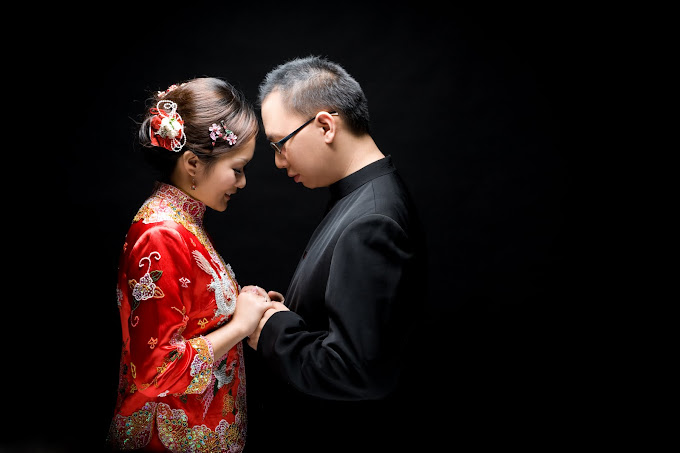
wedding countdown
ROM - 27th Mar 2010
Kelantan Wedding Dinner - 22th May 2010
Wedding Actual Day - 29th May 2010
KL Wedding Dinner - 30th May 2010
显示标签为“Thing that i learned”的博文。显示所有博文

2011年9月13日星期二

7 things that should not be done after meal

Here is the 7 facts that should not be done after a meal.

1. Do not smoking
Research from the experts proves that smoking a cigarette after a meal equal to smoking 10 cigarettes (the possibility of cancer is greater).

2. Do not eat fruits directly
Directly eat fruits after meals will cause stomach filled with air. For eating fruit, do it after a meal 1-2 hours or 1 hour before meals.

3. Do not drink tea
Because the tea leaves contain a high acid content. This content will cause the protein content in foods that we consume is difficult to digest.

4. Do not loosened tie around your waist (belt)
Loosen belt after a meal will cause the intestine twisted and blocked.
5. Do not walking directly
People often say that walking a few steps after eating will prolong your life. In fact this is not true. Walking will cause the digestive system can not absorb the nutrients from the foods we eat. It’s become USELESS !!
6. Do not take a Bath or Shower
Bath will increase blood flow to the hands, feet and body that causes the amount of blood around the stomach will continue to decrease. This will weaken the digestive system in our stomach.

7. Do not sleep immediately
Food that we eat can not be digested well. This will cause the intestinal inflammation and stomach experience.

2010年9月5日星期日

Borrow vs Lend

Use 'borrow' when taking money from someone, use 'lend' when giving money to someone.

She borrowed $4000 from her parents.
The bank lent me $2000 to cover the costs.

Useful Expression

  1. When You Want to Make Sure Someone Understands You
    Do you follow me?
    Are you with me?
    With me so far?
  2. When You Don't Understand What Someone Is Saying
    I don't get it.
    I don't follow you.
    I'm not sure I get your point.
    I'm not sure I know what you mean.
  3. Showing Strong Disagreement
    I'm afraid I disagree with you.
    I'm afraid I can't agree with you.
    I couldn't disagree (with you) more
  4. Showing Total Agreement
    I couldn't agree with you more.
    Couldn't have said it better.
  5. Declining an Invitation
    I'd love to, but I'm afraid I'm busy tonight.
    I'd love to, but I already have plans tonight.
  6. Making a Visitor Feel at Home
    Make yourself at home.
    Make yourself comfortable.
  7. Asking a Question to Start a Conversation
    So, what's new with you?
    How have you been?
    What have you been doing lately?
    What's new? Fill me in. (Fill me in = Tell me everything)
    How's your son doing? How old is he now?
    Your daughter must be in her teens now. How's she doing?
    Seen any good movies lately?
    Read any good books lately?
  8. Guest - Stating You Have to Leave
    Well, it's getting late. I'd better get going.
    I'm afraid I have to go. I have a big day tomorrow. (a big day = a busy day)
    I'd better be off. I have to get up early tomorrow.
    I'd better get going. It's a long drive home.
    Well, time to go. (informal)
    Time to hit the road. (idiom, informal)
  9. Guest - Thanking Your Host
    Thanks for a lovely evening. (formal)
    Thanks for a lovely time. (formal)
    Thank you for inviting us.
    Thank you for having me over.
    I had a great time. Thanks.
    I had a lovely evening. Thanks for asking me over.
    Thanks for the food and drinks!
    Thanks for the good food and good company.
  10. Telling a Caller He/She Has Got the Wrong Number I'm sorry, you've got the wrong number.
    There is no one by that name here.
    I think you've dialed the wrong number.
    You've got the wrong number.
    Sorry, wrong number
  11. Bringing a Telephone Conversation to an End
    It's been a pleasure talking to you. Bye now.
    Thank you for calling. Good-bye.
    Can we continue this later? I have a call on another line.
    Could we continue this later? I have a meeting right now.
    Excuse me, can I call you back? Something urgent has come up.
    Excuse me, I'm in the middle of something. Can I call you back?
  12. Common Shopping Questions by a Customer
    I don't like the color. Do you have this in a different color?
    Do you have these pants in blue?
    It's too loose. Do you have this in a smaller size?
    It's too tight. Do you have this in a larger size?
    Do you have this in Medium?
    Do you have this in cotton?
    It's a little over my budget. Do you have something less expensive?
    Do you have something less pricey? (= less expensive)
    Can I try this on?
    Where is the fitting room?
    Can you gift wrap that?
    Can I get this gift wrapped?
    Would you please gift wrap that?
  13. Compliments by a Salesperson
    That shirt looks really nice on you!
    That looks great on you.
    You look great in that dress.
    That dress really flatters your figure.
    You look really smart in this suit, sir!
    Red is your color!

-ed vs -ing

Adjectives that end with -ed talk about one's own feelings, whereas adjectives that end with -ing talk about a person, a thing or a situation that causes one's feelings.

For example:

The movie was boring (so I felt bored).
This book is so interesting (so I am interested in the book).
My boyfriend has a very annoying habit (so I am annoyed).
English usage can be confusing (so a lot of students are confused).
My husband's job promotion was surprising (so we were very surprised).
The baseball game between the Giants and the Tigers was exciting (so the fans were excited).

Go

We use the form go + verb + ing. We don't put to after go + verb + ing.

For example:

go skiing
go camping
go fishing
go shopping

After the form go + to, we usually say where (a place).

For example:

go to Canada
go to the supermarket
go to the library
go to school

Hear vs Listen to

When I open the windows, I can hear birds singing and dogs barking.
I enjoy listening to Japanese pop music.

"Hear" is an "inactive" verb. You don't have to actively think about the action of "hearing".

"Listen to" is an "active" verb. You have to actively think about the action of "listening". You have to want to do it.

Modal


In At On


Too vs Very

What's the difference between the following two sentences?

It's very cold.
It's too cold.

The first sentence is just a statement. The second sentence, however, implies some sort of difficulty. For example, maybe it's too cold so we can't go outside.

Another example:

She is very busy.
She is too busy.

Again. The first sentence is just a statement, but the second sentence means something more. Maybe she is too busy so she has no time to study, or maybe she is too busy so she cannot come to the party this weekend...


So, remember, when we use "too", it has a negative feeling; it implies that there is some kind of problem. After all, too much of something is not good!

See vs Look at vs Watch

Well, "see" is an "inactive" verb. So long as your eyes are open, you don't have to actively think about the action of "seeing".


"Look at" and "watch" are "active" verbs. You have to actively think about the action of "looking" and "watching". You have to want to do it.


"Look at" is usually used when the action lasts for a short time, while "watch" is used for actions that last for a longer period of time.

2010年8月18日星期三

White Board Marker Pen vs Permanent Marker Pen

Today only realised on how to differentiate White Board Marker Pen and Permanent Marker Pen.
White Board Marker Pen's body is in WHITE and Permanent Marker Pen's body is in YELLOW.
Easy to remember right? :)

2010年8月16日星期一

为什么公狗小便时要抬着一条腿?

还记得我们在KLZ家讨论的话题吗?
以下解除了我们的疑团。。。

为什么公狗小便时要抬着一条腿?

幼犬不分雌雄,排尿时都采取蹲下的方式,到八九个月的时候,公狗就会抬腿撒尿了。

很多人认为,公狗抬腿撒尿是为了吸引母狗,以展示自己的性别。另一方面,抬腿撒尿也是为不使自己弄湿。其实,公狗抬腿撒尿的原因并不只如此,大部分公狗撒尿前会先闻一闻味道,目的是先确定是否有其它公狗的尿味,如果有,它就会赶紧抬腿小解,把尿洒在尽可能大的范围内,以覆盖其它公狗尿的味道,等于在这个地方竖了块招牌:私人领域,闲“狗”勿入!有时小狗要占领的地盘太大,它就会把尿分期分批地排泄,甚至到了排不出尿的时候,还习惯似地做做撒尿的动作,努力滴出一二滴出来。那么母狗就不会有势力范围的概念了吗?有,但不像公狗那么明显。有些母狗会抬起腿来排尿,但只是微微抬起而已。接近发情期时,母狗会检查附近的狗尿味,并把一点一滴的排尿在有公狗尿味的地方。

一般情况下,狗排尿量最大的地方是离家最近的第一泡。狗有洁癖,如果它尿在自己屋里,只能归咎它的主人每天不带它定时出去。很早学会在外面排尿、排便的狗,个性比较坚强,而那些只敢在有主人保护下的狭窄地盘排泄的狗则较胆怯。

此外有些狗儿在排泄完后用脚刨土,也是为了将脚上汗腺味道留下,因为狗的汗腺只分布在脚垫上。